professioneller Hersteller, seit 2009.
den Duft der Liebe auf der ganzen Welt verbreiten


Deutsch
Kategorien
Neuer Blog
So wählen Sie den richtigen Duftdiffusor für Ihre Gewerbefläche: Ein vollständiger Einkaufsführer August 27 , 2026
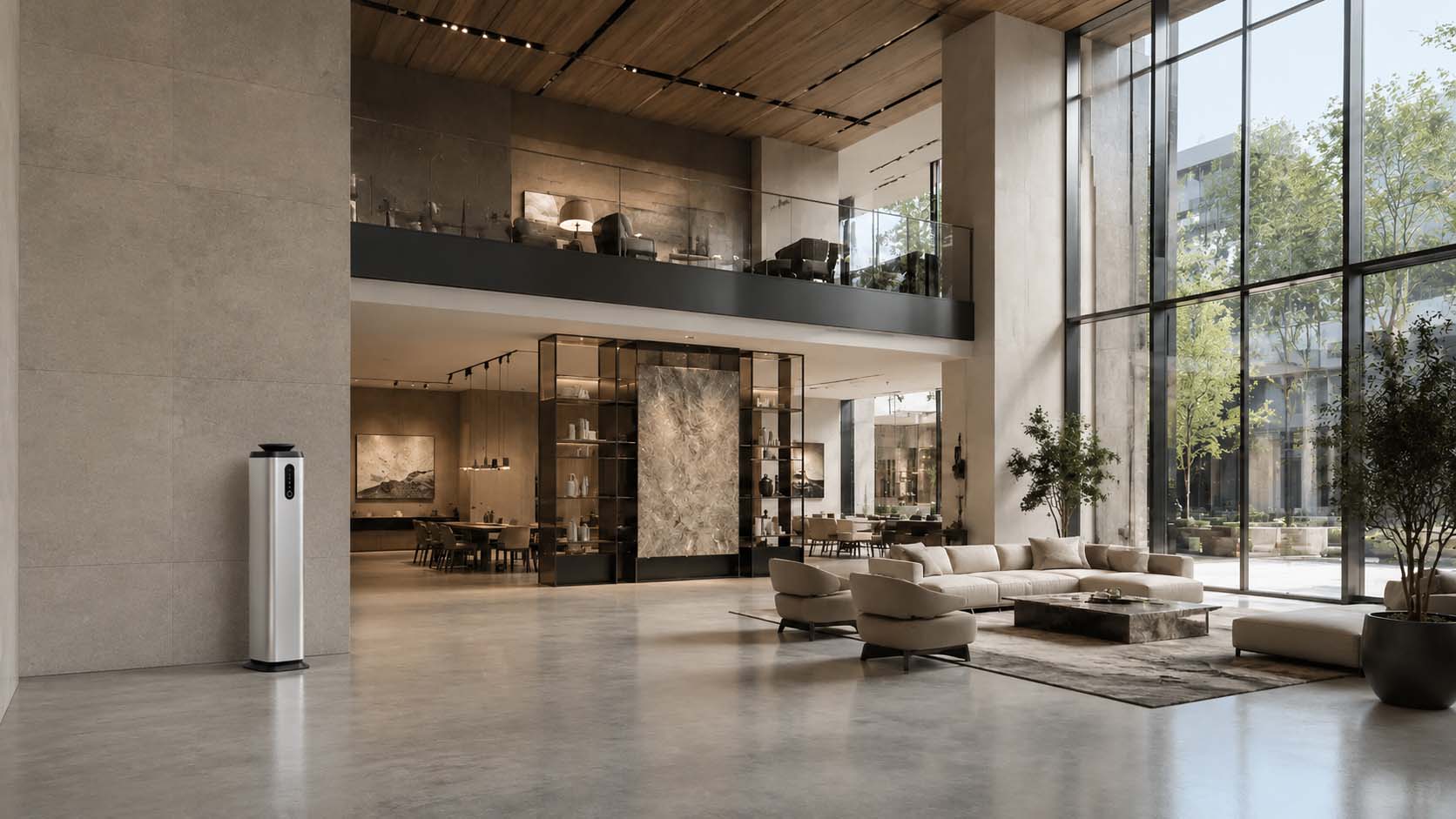
Bei der Wahl eines Duftzerstäubers für den gewerblichen Gebrauch geht es nicht einfach darum, das Modell mit der größten veröffentlichten Reichweite zu finden.
Eine Hotellobby, eine Modeboutique, ein Büroempfang, ein Fitnessstudio, ein Ausstellungsraum und ein Einkaufszentrum können ähnliche Grundflächen aufweisen, aber völlig unterschiedliche Deckenhöhen, Luftströmungsmuster, Öffnungszeiten, Lärmgrenzwerte und Installationsvorschriften.
Die richtige Duftmaschine muss sowohl zum Gebäude als auch zur Duftstrategie passen.
Dieser Leitfaden bietet Hotelbetreibern, Einzelhändlern, Immobilienverwaltern, Vertriebshändlern und Einkaufsteams ein praktisches Verfahren zur Auswahl eines gewerblichen Duftzerstäubers, ohne die Geräte zu überdimensionieren oder die Betriebskosten außer Acht zu lassen.
Wählen Sie einen handelsüblichen Duftzerstäuber erst, nachdem Sie sechs Eingangsgrößen bestätigt haben:
Der genaue Bereich oder die Zone, die beduftet werden soll
Das Kubikvolumen dieser Zone
Wie Luft in den Raum eintritt, sich durch ihn hindurchbewegt und ihn wieder verlässt
Ob die Installation als Einzelgerät, an der Wand montiert oder an die Klimaanlage angeschlossen sein soll
Der erforderliche Betriebsplan, der Geräuschpegel und die Kontrollmethode
Der erwartete Duftölverbrauch, der Wartungsaufwand und die Gesamtkosten
Veröffentlichte Berichte sind hilfreich, um eine Vorauswahl zu treffen. Sie ersetzen jedoch keine Standortbesichtigung oder Inbetriebnahme vor Ort.
Beginnen Sie mit dem Zweck des Projekts und nicht mit der Maschine.
Unterschiedliche Ziele erfordern unterschiedliche Duftkonzepte:
Ein Hotel möchte möglicherweise einen einheitlichen Ankunftseindruck in der Hauptlobby vermitteln.
Ein Einzelhändler wünscht sich möglicherweise eine wiedererkennbare Markenatmosphäre im Eingangsbereich und auf der Verkaufsfläche.
Ein Büro wünscht sich möglicherweise ein unaufdringliches Empfangserlebnis, ohne die einzelnen Arbeitsbereiche zu beeinträchtigen.
Ein Immobilien-Showroom benötigt möglicherweise während der Präsentationen einen Duft, aber nicht über Nacht.
Ein Spa benötigt möglicherweise einen ruhigen Betrieb und eine geringere Intensität in der Nähe der Behandlungsräume.
Ein Betreiber mit mehreren Standorten legt möglicherweise Wert auf standardisierte Einstellungen und einfache Arbeitsabläufe.
Beschreiben Sie das angestrebte Ergebnis in einem Satz. Zum Beispiel:
Erzeugen Sie während der Öffnungszeiten einen dezenten, gleichmäßigen Duft im 600 m³ großen Empfangs- und Wartebereich, ohne dass der Duft in angrenzende Besprechungsräume dringt.
Das ist sinnvoller als die Anfrage nach einer „leistungsstarken Duftmaschine“.
Die Auswahl von gewerblichen Diffusoren sollte mit dem Raumvolumen beginnen:
Raumvolumen = Länge × Breite × durchschnittliche Deckenhöhe
Ein Ladenlokal mit den Maßen 20 Meter mal 10 Meter und einer Deckenhöhe von 4,5 Metern hat beispielsweise ein ungefähres offenes Volumen von:
20 × 10 × 4,5 = 900 m³
Zwei Räumlichkeiten mit der gleichen Grundfläche von 200 m² können unterschiedliche Ausstattungen erfordern, wenn die eine eine Deckenhöhe von 3 Metern und die andere ein Atrium von 7 Metern aufweist.
Erfassen Sie mehr als nur die Zahl in der Überschrift. Fügen Sie Folgendes hinzu:
Offene und geschlossene Bereiche
Zwischengeschosse und Atrien
Treppenhäuser, die andere Etagen miteinander verbinden
Umkleidekabinen oder private Räume
Häufig geöffnete Außentüren
Bereiche, die durch raumhohe Wände getrennt sind.
Räume, die geruchsneutral bleiben sollten
Addieren Sie nicht automatisch alle Räume zu einer Gesamtzahl. Ein geschlossenes Büro und eine offene Lobby benötigen möglicherweise eine separate Kontrolle, selbst wenn sie zum selben Gebäude gehören.
Duftstoffe folgen der Luftbewegung. Ein Grundriss allein kann nicht zeigen, wie sie sich ausbreiten.
Identifizieren Sie im Rahmen der Standortbesichtigung Folgendes:
Zuluft- und Abluftgitter für die Klimaanlage
Frischluftzufuhrpläne
Abluftventilatoren
Dreh-, Schiebe- oder dauerhaft offene Türen
Rolltreppen, Aufzugsvorräume und Treppenhäuser
Eingänge mit hohem Verkehrsaufkommen
Große Ventilatoren oder Luftschleier
Trennwände und hohe Regale
Grenzen des Gastronomiebereichs oder der Küche
Personalpositionen und Sitzplätze für längere Aufenthalte
Die neuestenANSI/ASHRAE-Standard 62.1-2025Die Norm umfasst Lüftung, Filtration, Steuerung, Gebäudebetrieb und Instandhaltung zur Sicherstellung einer akzeptablen Raumluftqualität. Die Ausgabe 2025 enthält aktualisierte Anforderungen an die bedarfsgesteuerte Lüftung, was relevant ist, da sich der Luftstrom je nach Belegung und Systembetriebszeiten ändern kann.
Ein Duftdiffusor muss mit der Luftzirkulation des Gebäudes funktionieren, sorgt aber nicht für Frischluftzufuhr, entfernt keine Schadstoffe und ersetzt keine Belüftung.Aktuelle Richtlinien der US-Umweltschutzbehörde (EPA) zur Innenraumluftidentifiziert Quellenkontrolle, Belüftung und Filtration bzw. Luftreinigung als zentrale Strategien zur Verbesserung der Raumluftqualität.
Bei Problemen mit Rauch, Feuchtigkeit, Schimmel, Abfluss, Lebensmittelresten oder Belüftung in einem Raum sollte zunächst die Ursache ermittelt werden. Duftstoffe eignen sich nicht, um ungelöste Mängel zu kaschieren.
Die wichtigsten Bauformen sind eigenständige Systeme, Wandmontagesysteme und Systeme, die an die Heizungs-, Lüftungs- und Klimaanlage angeschlossen sind.
Einzelplatzrechner stehen auf dem Boden, einem Regal oder einer stabilen Möbeloberfläche. Sie lassen sich in der Regel am schnellsten installieren und umstellen.
Sie sind nützlich, wenn:
Der Standort benötigt einen Pilotversuch
Der Zugang zum Lüftungskanal ist nicht möglich.
Die Zielzone erfordert eine unabhängige Steuerung.
Der Mieter darf das Gebäude nicht verändern.
Der Grundriss ändert sich regelmäßig.
Die Geräte können sicher positioniert werden.
Zu den Einschränkungen gehören die Sichtbarkeit, lokale Geräusche, die Verlegung der Elektrokabel und die Möglichkeit, dass sich der Duft in der Nähe des Geräts konzentriert.
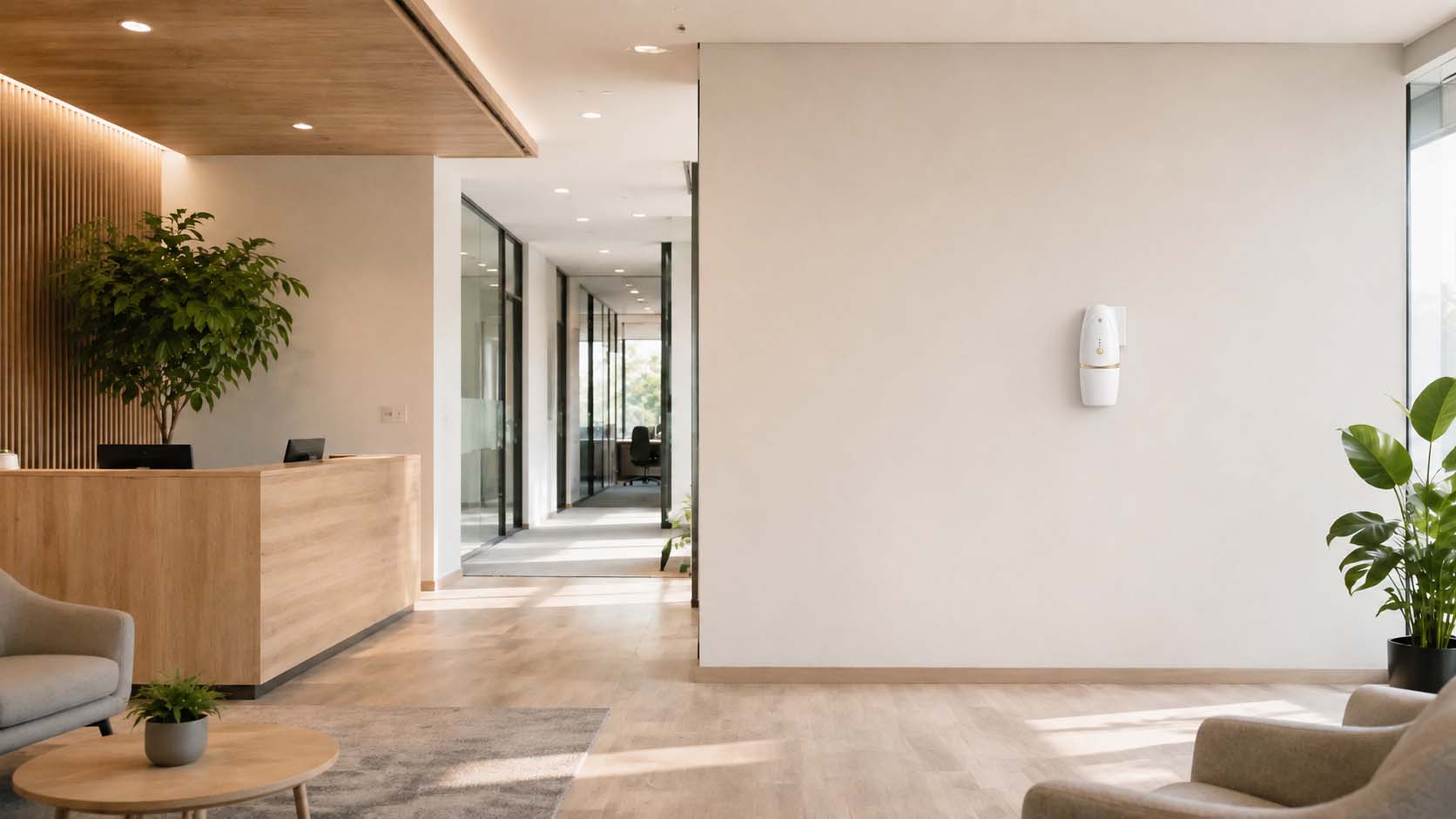
Wandmontierte Geräte sorgen für freie Flächen auf Arbeitsflächen und Böden. Sie eignen sich für Büros, Flure, Toiletten, kleinere Verkaufsflächen und Empfangsbereiche, sofern eine geeignete Wandposition und ein Stromanschluss vorhanden sind.
Stellen Sie sicher, dass das Gerät nicht durch Möbel, Vorhänge, Waren, Türen oder Kundenschlangen verdeckt wird. Es muss außerdem für Ölwechsel und Wartungsarbeiten zugänglich bleiben.
An HVAC scent diffuser introduces fragrance into compatible building airflow for broader distribution.
This can suit large permanent spaces when:
The intended area matches a controllable HVAC zone
Equipment should remain outside the customer area
The duct route and injection position are suitable
Facility staff can provide service access
The building owner and engineering team approve the installation
Do not connect tubing to an arbitrary supply or return duct. A qualified building or HVAC professional should review airflow direction, pressure, shared zones, filtration, operating hours, and the risk of fragrance reaching unintended areas.
Coverage should be only one line in the comparison.
Commercial equipment should allow the operator to reduce or increase output through controlled work and pause periods. The available range should be suitable for the smallest intended setting, not only maximum output.
Check whether the machine supports daily time periods, different days of the week, automatic restart, and an easy method for returning to approved settings.
Noise matters in spas, meeting areas, quiet retail environments, VIP lounges, and reception desks. Ask how the published noise figure was measured and assess the sample in the actual placement position.
A larger bottle can reduce refill frequency, but it also increases the amount of oil stored in the device. Select capacity using operating hours, tested consumption, access frequency, and staff responsibility.
Possible options include buttons, touch controls, Bluetooth, Wi-Fi, or an App. More connectivity is useful only if the customer can support account management, permissions, updates, network access, and staff training.
Public-facing equipment may need a lock, hidden controls, secure oil access, or placement outside customer reach.
Confirm how staff reach the oil bottle, atomizer, tubing, seals, filter, and power connection. A concealed installation still needs convenient service access.
The following framework helps narrow the format before comparing individual models.
| Commercial Space | Main Buying Priority | Typical Starting Format |
|---|---|---|
| Large hotel lobby | Broad coverage, quiet operation, premium appearance | Floor-standing or reviewed HVAC solution |
| Fashion or lifestyle retail | Local control, flexible placement, brand presentation | Standalone commercial diffuser |
| Office reception | Subtle output, low noise, simple maintenance | Compact standalone or wall-mounted diffuser |
| Showroom or sales center | Scheduling, visible design, changing occupancy | Floor-standing diffuser |
| Spa or wellness reception | Quiet operation, low minimum output | Compact or wall-mounted diffuser |
| Large multi-zone property | Independent zones and centralized distribution | Multiple standalone units or engineered HVAC plan |
These are starting points, not automatic prescriptions.
TheDANQ M63 floor-standing scent diffuseris designed for large commercial areas. Current company materials publish a 1,000 ml bottle, standalone installation, low-noise operation, and coverage up to 4,000 m³.
That published figure should be used to shortlist the model, not to guarantee performance in every 4,000 m³ property. A high-ceiling lobby with open doors and strong fresh-air supply may perform differently from an enclosed showroom of the same volume.
The Q1000PRO is part of DANQ’s commercial scent equipment range and can be considered for retail, hospitality, office, and other project environments.
Because final selection depends on the current model configuration, request the latest Q1000PRO specification sheet, installation options, oil capacity, control functions, noise conditions, consumption estimate, and model-specific documents before purchase.
The S915 is a wall-mounted plug-in model designed to keep floor and counter space clear. DANQ product materials describe waterless operation, Bluetooth control, and quiet performance.
Confirm the plug standard, mounting orientation, coverage requirement, lowest output, oil capacity, and service access for the destination market and intended location.
Unit price does not show the full cost of a commercial scent program.
Compare:
Equipment price
Installation or electrical work
Fragrance-oil consumption
Oil price and shipping classification
Refill and cleaning labor
Atomizer cores, seals, tubing, and other wear parts
App or remote-management requirements
Staff training
Replacement equipment or downtime allowance
Freight, duties, and local taxes
A basic operating estimate can use:
Monthly oil cost = tested hourly consumption × daily operating hours × operating days × oil price
Do not use maximum-output consumption if the approved program runs at a much lower duty cycle. Test with the selected fragrance because viscosity and volatility can affect atomization and consumption.
Also compare labor. A lower-priced device that needs frequent local attention may cost more across 30 or 100 locations than equipment with a longer, predictable refill cycle.
The machine, oil, and settings operate as one system.
Before approving bulk oil or equipment, verify:
Atomization stability
Fragrance character after diffusion
Residue around the outlet
Compatibility with tubing, seals, and the atomizer
Consumption under the proposed schedule
Performance after extended operation
Required cleaning interval
A fragrance that smells balanced on a blotter may change after diffusion. Highly volatile notes may dominate first, while heavier materials can affect persistence and maintenance.
Request the current Safety Data Sheet and other documents required for the exact oil, application, and destination market. Do not assume that one fragrance document covers every formula or that every oil is compatible with every diffuser.
Start below the expected final setting and increase gradually.
A useful pilot should include:
Installation during normal building operation
An agreed starting work and pause cycle
Checks at the entrance, center, boundaries, and staff positions
Review during quiet and busy periods
Oil-level and maintenance records
Customer and staff feedback
A documented final setting
Use a simple intensity scale such as:
Absent
Subtle
Noticeable
Strong
Uncomfortable
Ask new arrivals as well as employees. Staff may become less aware of the fragrance after extended exposure.
If the scent reaches restaurants, treatment rooms, neighboring tenants, private offices, or other unintended areas, adjust placement, output, zoning, or operating periods before adding more equipment.
Provide enough information for a project-specific recommendation.
Your RFQ should include:
Country and destination market
Type of commercial property
Floor plan and photographs
Length, width, and ceiling height
Target scenting zones
Areas that must remain unscented
HVAC information and operating schedule
Door and traffic conditions
Required installation format
Daily business hours
Noise expectations
Preferred control method
Fragrance direction
Estimated number of locations
Sample requirements
OEM/ODM requirements
Required model-specific documents
Avoid asking only, “Which machine covers 1,000 square meters?” The supplier needs volume, airflow, zoning, and operating information to make a useful recommendation.
Before approving the purchase order, confirm:
Approved model and hardware revision
Installation method and placement drawing
Voltage, adapter, and plug standard
Oil bottle and atomizer configuration
Fragrance code and approved sample
Initial operating schedule
Cleaning and refill procedure
Spare-parts list
Warranty and after-sales process
Packaging and accessories
Logo, color, or App customization
Current model-specific compliance documents
Pre-shipment inspection criteria
Change-control process
Certification claims should always be verified by exact model and destination. A document for another SKU or an earlier hardware version may not apply to the equipment being ordered.
Calculate the cubic volume using length × width × average ceiling height. Then evaluate airflow, doors, HVAC schedules, zoning, and fragrance intensity before choosing the final model.
No. An oversized machine may create an uncomfortable hot spot, short work cycles, higher cost, or unnecessary noise. The lowest controllable output is important in smaller or quiet spaces.
Choose standalone equipment for flexible placement, pilots, and independent local control. Consider HVAC integration for large permanent zones only after the building system and shared airflow have been reviewed.
A fragrance system is not a substitute for source control, cleaning, ventilation, filtration, moisture correction, or building maintenance. Resolve the source of persistent odors first.
The interval depends on the model, oil, schedule, environment, and operating hours. Follow the model-specific instructions and record refills, cleaning, consumption, and component replacement.
Send the property type, dimensions, ceiling height, HVAC information, doors, business hours, installation restrictions, fragrance direction, destination market, and expected quantity.
The best commercial scent diffuser is not automatically the machine with the highest output. It is the system that delivers controllable fragrance across the intended zone while remaining practical to install, operate, refill, clean, and support.
Measure cubic volume, map airflow, compare installation formats, calculate operating cost, and test the selected machine with the selected fragrance in the real property.
DANQ produziert seit 2009 Duftdiffusionsgeräte und unterstützt Projekte in den Bereichen Gewerbe, HLK, Haushalt, Automobil, Duftöle sowie OEM/ODM-Projekte. Käufer können Modellempfehlungen, Produktkataloge, Angebote, Gerätemuster und Duftproben anfordern.
Kontaktieren Sie DANQ Aroma für eine Empfehlung für einen gewerblichen Duftdiffusor.

professioneller Hersteller, seit 2009.
den Duft der Liebe auf der ganzen Welt verbreiten


Guangzhou DANQ Environmental Technology Co.,LTD