professioneller Hersteller, seit 2009.
den Duft der Liebe auf der ganzen Welt verbreiten


Deutsch
Kategorien
Neuer Blog
HVAC-Aromaduft-Diffusorsystem vs. eigenständig: Ein Leitfaden für gewerbliche Käufer August 19 , 2026
Ein gewerbliches Duftprojekt kann beeinflussen, wie Kunden einen Raum bewerten und in Erinnerung behalten – aber allein die Ausstattung erzeugt dieses Ergebnis nicht. Ein Journal of Marketing Meta-Analyse mit 64 Artikeln, 15.447 Befragten und 671 Effekten ergab durchschnittliche Steigerungen von etwa 3 % bis 15 % bei Messgrößen der Kundenreaktion. Die geschätzten Ausgaben stiegen in einer durchschnittlichen Umgebung um etwa 3 %.
Die Ergebnisse variierten je nach Duftübereinstimmung, Vertrautheit, Konzentration und Kontext. Ein schlecht abgestimmter oder überwältigender Duft kann schlechter abschneiden. Beginnen Sie daher mit dem Raum und dem Geschäftsziel – nicht mit der größten Abdeckungszahl.
Dieser Leitfaden erklärt, wann ein HVAC-Duftdiffusorsystem die richtige Wahl ist, wann ein eigenständiger gewerblicher Duftdiffusor sinnvoller ist und was Beschaffungsteams vor der Genehmigung einer Einführung prüfen sollten.
„Lassen Sie die Lobby gut riechen“ ist keine messbare Projektbeschreibung. Ein Hotel, eine Einzelhandelskette, ein Immobilienentwickler und ein Bürobetreiber können alle Düfte einsetzen, aber jeder sollte ein anderes Ergebnis definieren.
Ihr Ziel könnte sein:
Eine wiedererkennbare Ankunftserfahrung über mehrere Immobilien hinweg aufbauen
Wahrnehmungen von Komfort oder Markenkonsistenz verbessern
Kunden dazu anregen, eine Einzelhandelsfläche zu erkunden
Eine hochwertige Atmosphäre in einem Vermietungszentrum oder Musterapartment schaffen
Die Duftintensität über Standorte und Betriebszeiten hinweg standardisieren
Legen Sie vor der Installation eine Ausgangsbasis fest. Erfassen Sie Verweildauer, Konversionsrate, durchschnittlichen Transaktionswert, Gästefeedback, Duftbeschwerden und Ölverbrauch. Betrachten Sie Duft als eine testbare Erfahrung – nicht als garantierte Abkürzung zu mehr Umsatz.
Wählen Sie ein HVAC-verbundenes System wenn Sie eine breite, zentrale Verteilung über eine große offene Fläche oder eine definierte Klimaanlagenzone benötigen. Wählen Sie einen eigenständigen Diffusor wenn Sie lokale Kontrolle, eine schnelle Installation, einen Pilotversuch oder eine Beduftung in einem Raum ohne geeigneten Zugang zu Luftkanälen benötigen.
Die Entscheidung wird klarer, wenn Sie sechs Faktoren vergleichen:
| Kauffaktor | HVAC-verbundenes System | Eigenständiges System |
|---|---|---|
| Abdeckungsmuster | Breite Verteilung durch kompatible Luftkanäle | Lokalisierte Verteilung vom Gerät aus |
| Installation | Erfordert Standort- und HVAC-Prüfung | Normalerweise einstecken, platzieren und programmieren |
| Zoneneinteilung | Folgt der ausgewählten HVAC-Zone | Einfach nach Raum oder Abteilung positionierbar |
| Visuelle Wirkung | Geräte können häufig verborgen werden | Das Gerät bleibt sichtbar, sofern es nicht sorgfältig verborgen wird |
| Pilotversuche | Es ist mehr Planung erforderlich | Schneller einzusetzen und umzusetzen |
| Zugang für Wartungsarbeiten | Hängt von der Position des Geräts und der Luftkanäle ab | Für das Personal vor Ort in der Regel unkompliziert |
Keine der beiden Varianten ist automatisch überlegen. Die richtige Lösung ist diejenige, die einen gleichmäßigen, kontrollierbaren Duft erzeugt, ohne Duftkonzentrationen, übermäßigen Lärm oder unnötigen Wartungsaufwand zu verursachen.
Ein HVAC-System kann in einer Hotellobby, einem Einkaufszentrum, einem Bürogebäude, einer Flughafenlounge oder einem großen Ausstellungsraum effektiv sein, wenn Raumvolumen und Luftstrom einen einzelnen lokalen Diffusor unzureichend machen. Der Duft wird in den kompatiblen Luftstrom des Gebäudes eingebracht, sodass er den vorgesehenen Bereich gleichmäßiger erreichen kann.
Dieser Ansatz ist besonders nützlich, wenn:
Der Raum hohe Decken oder ein großes Raumvolumen hat
Der Zielbereich einer steuerbaren HVAC-Zone entspricht
Das Gerät außerhalb des Sichtfelds der Kunden bleiben soll
Das Objekt einen zeitgesteuerten Betrieb über lange Geschäftszeiten benötigt
Die Gebäudeteams einen sicheren Wartungszugang gewährleisten können
Der Anschluss an die HVAC-Anlage bedeutet nicht einfach, einen Schlauch in irgendeinen Luftkanal zu stecken. Ihr Lieferant und Auftragnehmer sollten Druck, Luftstromrichtung, Einspritzposition, Filtration, Zonierung, Wartungszugang und eine unbeabsichtigte Duftverlagerung prüfen. Eine Angabe zur Reichweite ist nur ein Ausgangspunkt. Die Leistung verändert sich abhängig von Deckenhöhe, Frischluftzufuhr, Luftwechseln, geöffneten Türen, Rückluftwegen und der Flüchtigkeit des Duftstoffs.
Eigenständige Systeme sind häufig die praktischere Wahl für Boutiquen, Spas, Hotelflure, Empfangsbereiche, Musterhäuser, Besprechungsräume und einzelne Bürobereiche. Sie vermeiden Änderungen an Luftkanälen und ermöglichen es dem Betreiber, das Gerät zu versetzen, wenn sich Kundenverkehr oder Grundriss ändern.
Sie eignen sich auch für Pilotprojekte: Ein Einzelhändler kann vergleichbare Standorte testen, bevor er in einen umfassenderen HVAC-Einsatz investiert.
Die Platzierung ist entscheidend. Möbel können den Luftstrom einschränken, während ein Gerät neben einer Warteschlange eine unangenehme Duftkonzentration erzeugen kann. In kundenorientierten Bereichen sollte neben der Duftabgabe auch der Geräuschpegel berücksichtigt werden; ein leises Hoteldurftgerät kann für einen Spa-Empfang besser geeignet sein als ein Gerät mit hoher Duftabgabe.
Gewerbliche Kaltluftsysteme nutzen bewegte Luft, um Duftöl ohne Zugabe von Wasser oder Wärme zu zerstäuben. Im Vergleich zu einem wasserbasierten Ultraschallgerät bietet ein wasserloser Zerstäuber eine besser reproduzierbare Zeitsteuerung und macht das tägliche Befüllen des Wassertanks überflüssig.
„Wasserlos“ bedeutet nicht automatisch einen niedrigen Verbrauch. Der Ölverbrauch hängt vom Zerstäuber, der Viskosität, dem Betriebszyklus, dem Luftstrom und der Zielkonzentration ab. Fordern Sie Verbrauchsschätzungen für den geplanten Zeitplan an.
Auch wasserlose Systeme erfordern Wartung. Zerstäuber, Schläuche, Dichtungen und Ölbehälter sollten gemäß den Anweisungen des Herstellers überprüft und gereinigt werden. Nicht kompatible oder zu viskose Öle können zu instabiler Abgabe, Verstopfungen, Undichtigkeiten oder Materialschäden führen.
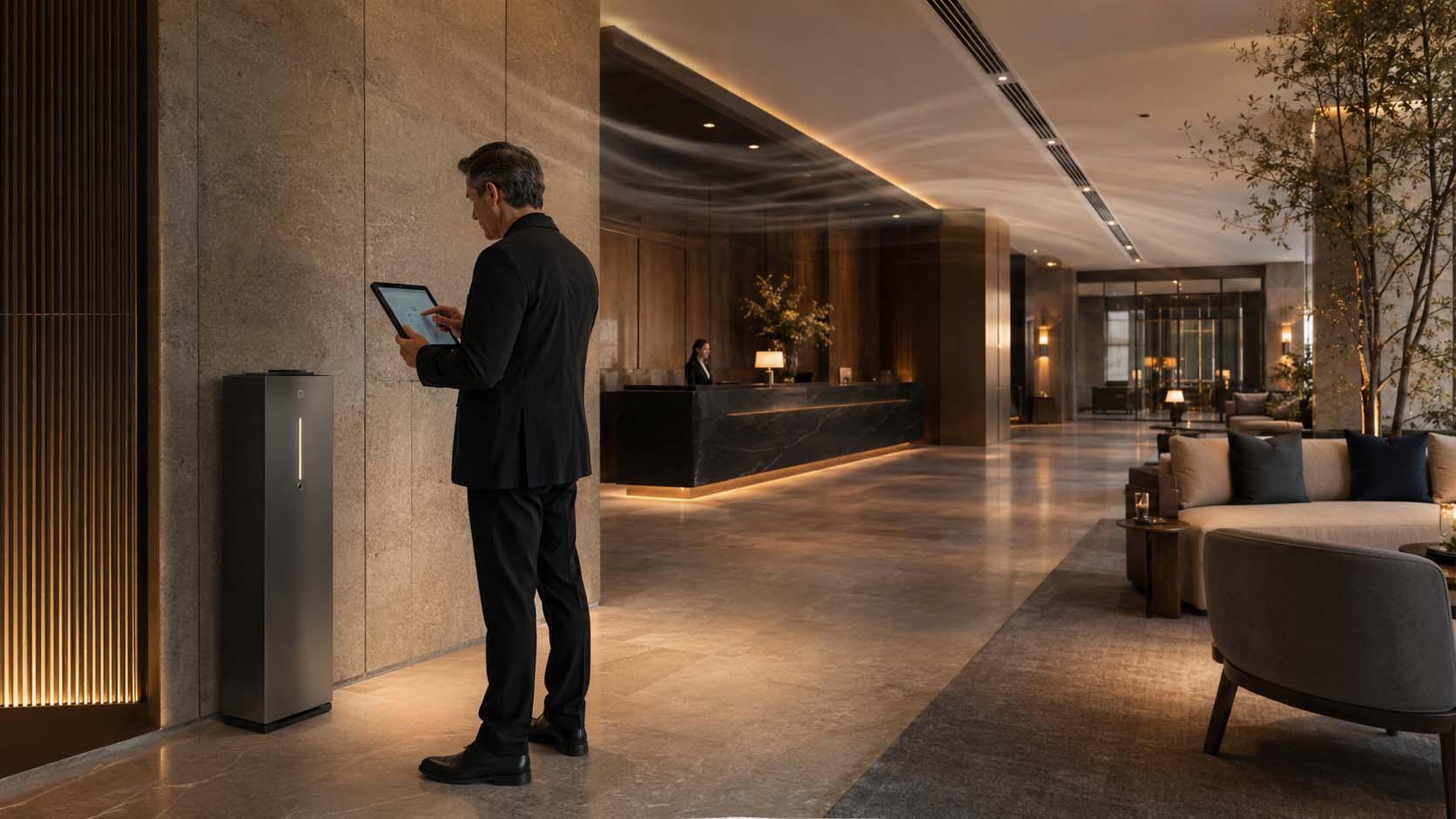
Stellen Sie sich eine Lobby mit hoher Decke, Drehtüren, einer Lounge auf der einen Seite und Empfangstresen auf der anderen vor. Ziel ist ein dezenter charakteristischer Duft bei der Ankunft – kein starker Duft direkt neben dem Empfang.
Ein Ingenieur berechnet das Raumvolumen und prüft den Luftstrom. Eine kompatible HVAC-Zone kann eine großflächige Verteilung ermöglichen; eine Lounge, die eine andere Intensität benötigt, kann eine zweite Zone oder ein leises eigenständiges Gerät erfordern.
Das Hotel sollte mit geringer Intensität testen, Feedback sammeln und angrenzende Bereiche überprüfen. Erfolg bedeutet Konsistenz und Akzeptanz – nicht einfach nur Wahrnehmbarkeit.
Ein Einzelhändler mit 20 Geschäften kann über uneinheitliche HVAC-Anlagen und unterschiedliche Verkaufsflächen verfügen. Überall dasselbe große Kanalgerät zu installieren, würde die Kosten erhöhen, ohne ein einheitliches Ergebnis zu garantieren.
Ein besserer Plan gruppiert die Geschäfte nach Raumvolumen und Luftstrom und testet anschließend zwei oder drei eigenständige Modelle. Danach vergleicht das Management Verweildauer, Konversionsrate, Feedback, Nachfüllhäufigkeit und Arbeitsaufwand mit einem Ausgangswert.
Das Geräteangebot macht nur einen Teil der gewerblichen Investition aus. Ein sinnvoller Vergleich der Gesamtkosten umfasst:
Kosten für Diffusor und Installation
Duftölverbrauch beim geplanten Zeitplan
Arbeitsaufwand für Nachfüllen und vorbeugende Wartung
Zerstäuberkerne, Dichtungen, Schläuche und andere Ersatzteile
Anforderungen an Fernverwaltung oder App
Ausfallzeiten und Kundendienstreaktion
Schulung, Versand, Zölle und lokale elektrische Anforderungen
Für eine ROI-Schätzung vergleichen Sie den zusätzlichen Bruttogewinn und messbare Erfahrungsgewinne mit den vollständigen Programmkosten. Vermeiden Sie es, eine Geschäftsgrundlage auf eine isolierte Branchenbehauptung zu stützen. Die Meta-Analyse von Raumdüften zeigt, warum Kontext und Umsetzung positive, neutrale oder negative Ergebnisse hervorbringen können.
Wählen Sie Hardware und Duft gemeinsam aus. Die Ölformulierung beeinflusst die Zerstäubung, während Duftcharakter, Intensität und kulturelle Vertrautheit die Kundenreaktion beeinflussen.
Bevor Sie Duftöl in großen Mengen im Großhandel bestellen, testen Sie Proben im Veranstaltungsort bei unterschiedlichen Auslastungsgraden und Entfernungen. Gehen Sie nicht davon aus, dass ein Profil in allen Märkten dieselbe Bedeutung hat.
DanQ gibt an, dass seine Bibliothek mehr als 3.000 Duftoptionen in den Bereichen Tee, floral, fruchtig, holzig und weiteren Richtungen umfasst. Käufer sollten dennoch aktuelle SDS, relevante Allergeninformationen, Chargenkontrollen, Kompatibilitätsbestätigungen und Dokumente für den Zielmarkt anfordern.
DanQ stellt seit 2009 Duftausrüstung her und unterstützt gewerbliche, private, automobile und OEM/ODM-Projekte. Unternehmensunterlagen geben an, dass seine Produkte in mehr als 180 Länder und Regionen exportiert wurden und dass die Fabrik ISO 9001- und SEDEX-Zertifizierungen besitzt.
Fordern Sie bei jedem Kauf aktuelle Zertifikate an und bestätigen Sie, dass CE-, RoHS-, SGS- oder andere Dokumente für das genaue Modell und den Zielmarkt gelten.
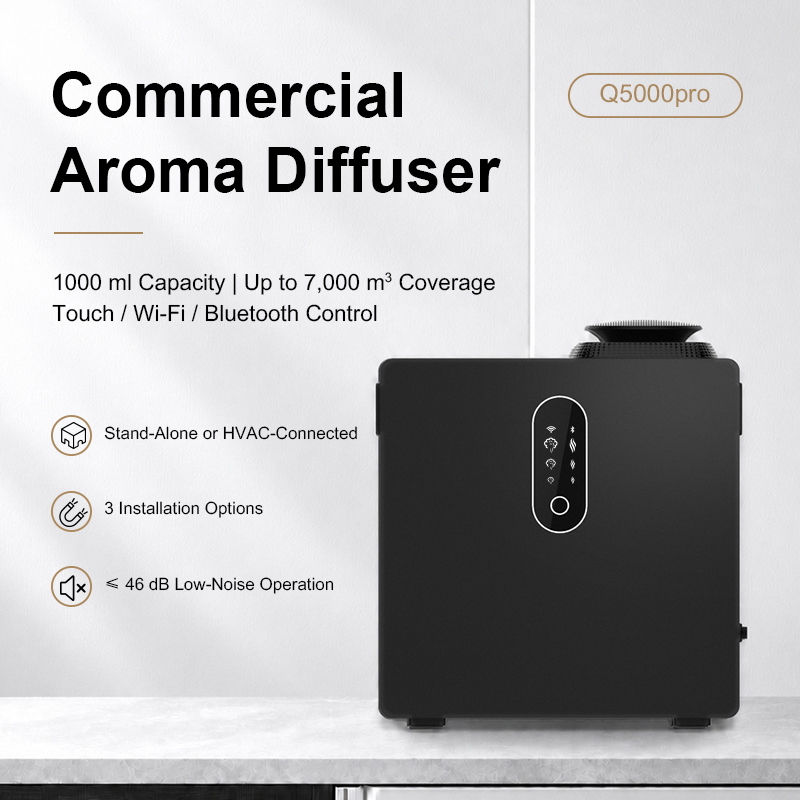
Für große Räume verfügt der Q5000PRO Hochleistungs-HVAC-Aromadiffusor über ein Ölvolumen von 1.000 ml, eine angegebene Abdeckung von bis zu 7.000 m³, Bluetooth-/Touch-Steuerung sowie Optionen für freistehende, wandmontierte oder HVAC-Installation.
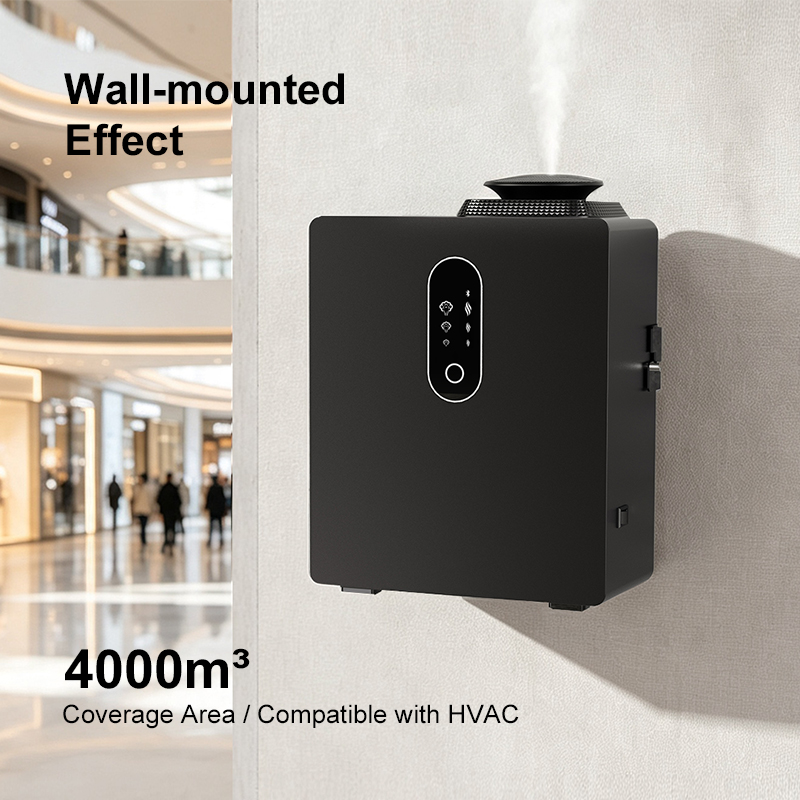
Der Q3000PRO gewerbliche HVAC-Duftdiffusor verwendet ebenfalls eine 1.000-ml-Flasche, mit einer angegebenen Abdeckung von bis zu 4.000 m³ sowie Wi-Fi-, Bluetooth- und Touch-Steuerungsoptionen.
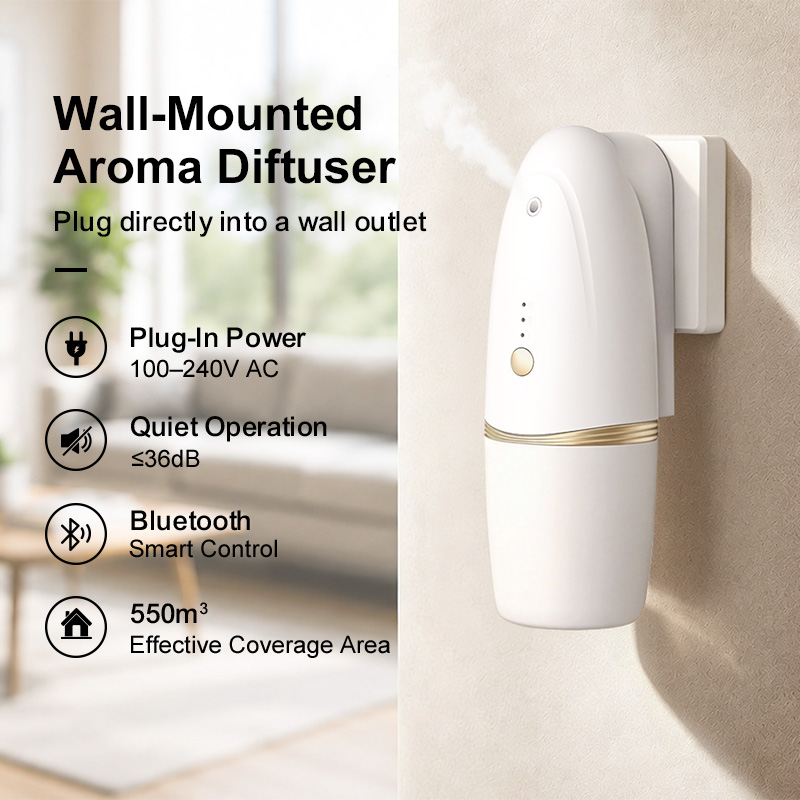
Für kundenorientierte Bereiche, in denen ein niedriger Betriebsgeräuschpegel wichtig ist, ist der S915 leise gewerbliche Duftdiffusor mit 36 dB angegeben.
Diese Spezifikationen sind für eine Vorauswahl nützlich, jedoch nicht für die endgültige technische Planung. Bitten Sie den Anbieter für Duftmarketing, die Ausrüstung anhand von Raumvolumen, Luftstrom, Zoneneinteilung, Geschäftszeiten, Duftauswahl und gewünschter Intensität zu empfehlen. Die Abdeckung sollte während der Inbetriebnahme überprüft werden.
Händler und Käufer von Eigenmarken sollten einen OEM-Hersteller von Duftmaschinen nach Folgendem fragen:
Ein modellspezifisches Datenblatt und aktuelle Konformitätsdokumente
Kompatibilität von Ölen und Verbrauchstests
Geräuschdaten mit angegebenen Testbedingungen
App-Sprache, Aktualisierungsrichtlinie und Konnektivitätsanforderungen
Verpackung, Farbe, Logo, Spannung und Steckeroptionen
Verfahren zur Musterfreigabe und Änderungssteuerung
Verfügbarkeit von Ersatzteilen, Garantieumfang und technischer Supportprozess
Kriterien für die Vorversandprüfung und Produktionsvorlaufzeit
DanQ unterstützt die Anpassung von Aussehen, Markenauftritt, Verpackung und ausgewählten Funktionen. Wandeln Sie jede Anforderung vor der Massenproduktion in eine genehmigte Spezifikation um, einschließlich Farben, Grafiken, App-Verhalten, Zubehör und Qualitätsgrenzen.
Beginnen Sie mit niedriger Leistung und erhöhen Sie diese schrittweise. Testen Sie während der tatsächlichen Geschäftszeiten und prüfen Sie, ob der Duft in Aufzüge, Gästezimmer, benachbarte Geschäfte oder Mitarbeiterbereiche gelangt.
Während eines zwei- bis vierwöchigen Pilotprojekts erfassen Sie:
Arbeits- und Pausenzyklen
Ölstand und Nachfüllhäufigkeit
Kunden- und Mitarbeiterfeedback
Beschwerden oder Berichte über Empfindlichkeit
Abdeckungskonsistenz nach Zone und Tageszeit
Relevante Geschäftskennzahlen im Vergleich zur Ausgangsbasis
Das Ziel ist eine erkennbare, aber unaufdringliche Atmosphäre. Wenn die meisten Besucher sofort kommentieren, wie stark der Duft ist, liefert das System möglicherweise zu viel Duft.
Wählen Sie die HVAC-Integration für große, kompatible Bereiche, die eine zentrale Verteilung benötigen. Wählen Sie eigenständige Geräte für flexible Platzierung, lokale Beduftung oder schnelle Pilotversuche.
In beiden Fällen dimensionieren Sie die Lösung anhand des Raumvolumens und der Luftströmung und validieren Sie sie anschließend mit dem ausgewählten Öl unter realen Betriebsbedingungen.
Wenn Sie ein Hotel-, Einzelhandels-, Büro-, Immobilien- oder Vertriebsprojekt planen, senden Sie DanQ Ihre Grundrissabmessungen, Deckenhöhe, HVAC-Informationen, Geschäftszeiten, gewünschte Duftrichtung, Zielmarkt und erwartete Menge.
Das DanQ-Team kann einen geeigneten kommerziellen Duftdiffusor empfehlen, einen Produktkatalog erstellen und Geräte oder Duftproben zur Bewertung bereitstellen.

professioneller Hersteller, seit 2009.
den Duft der Liebe auf der ganzen Welt verbreiten


Guangzhou DANQ Environmental Technology Co.,LTD